Visualising the Prison Expansion Trap
By Kathleen White*
At a moment when the Irish Government is investing millions of euros into prison expansion, we must critically analyse why expanding prison capacity is not a legitimate solution and appropriate use of public funds. As highlighted in the previous IPAN blog post by Keith Adams, prison expansion does not address underlying issues of overimprisonment and systemic failures. Building on this argument, in this blog piece I use descriptive statistics to visualise the relationship between prison overcrowding and prison capacity increases. Through visualisations of Irish Prison Service (IPS) prison population data I demonstrate that while prison expansion efforts may momentarily alleviate capacity issues, it is temporary and often short lived as prison populations continue to rise back to overcrowding numbers.
The IPS has published daily prison population statistics since January 2015. To analyse the prison population over time, I constructed a dataset by sampling the first Monday of every month between January 2015 - March 2026. The IPS publishes both the total number of people in custody along with the total number of beds within that facility, thus allowing for a calculation of capacity rate. Once cleaned, it resulted in a dataset containing 2,193 observations across 17 prisons.
The high number of prisons in the dataset is due to the way the IPS reports its data. For example, within Portlaoise Prison, the wings of A block, E block, and C block are each treated as separate institutions.
As such, blocks within prisons are treated as their own individual unit of analysis within my dataset. The original data included St. Patrick’s Institution, however, given that it closed down in April 2017, it was removed from the dataset. As such, this blog piece reports on a unique dataset built from information published by the IPS. It therefore provides a valuable insight into prison population and capacity dynamics within Ireland’s prison system over the past decade.
Visualising Overcrowding and Expansion
Figure 1 shows that overcrowding is not a new issue for Irish Prisons. In fact, there has not been a single year since 2015 that the Irish prison system has not experienced some level of overcrowding across its facilities. From 2022 onwards, overcrowding has been on an upward trend. Note the low levels in 2020 and 2021 due to the releases during the COVID pandemic. As we can see, from 2023 onwards, on average, across facilities, Irish Prisons have been overcrowded more than half of the year. As such, the overcrowding crisis is not a new issue. The Irish government and IPS have had ample time to explore other ways to deal with overcrowding. However, the policy solution is often the same: prison expansion and increased capacity.
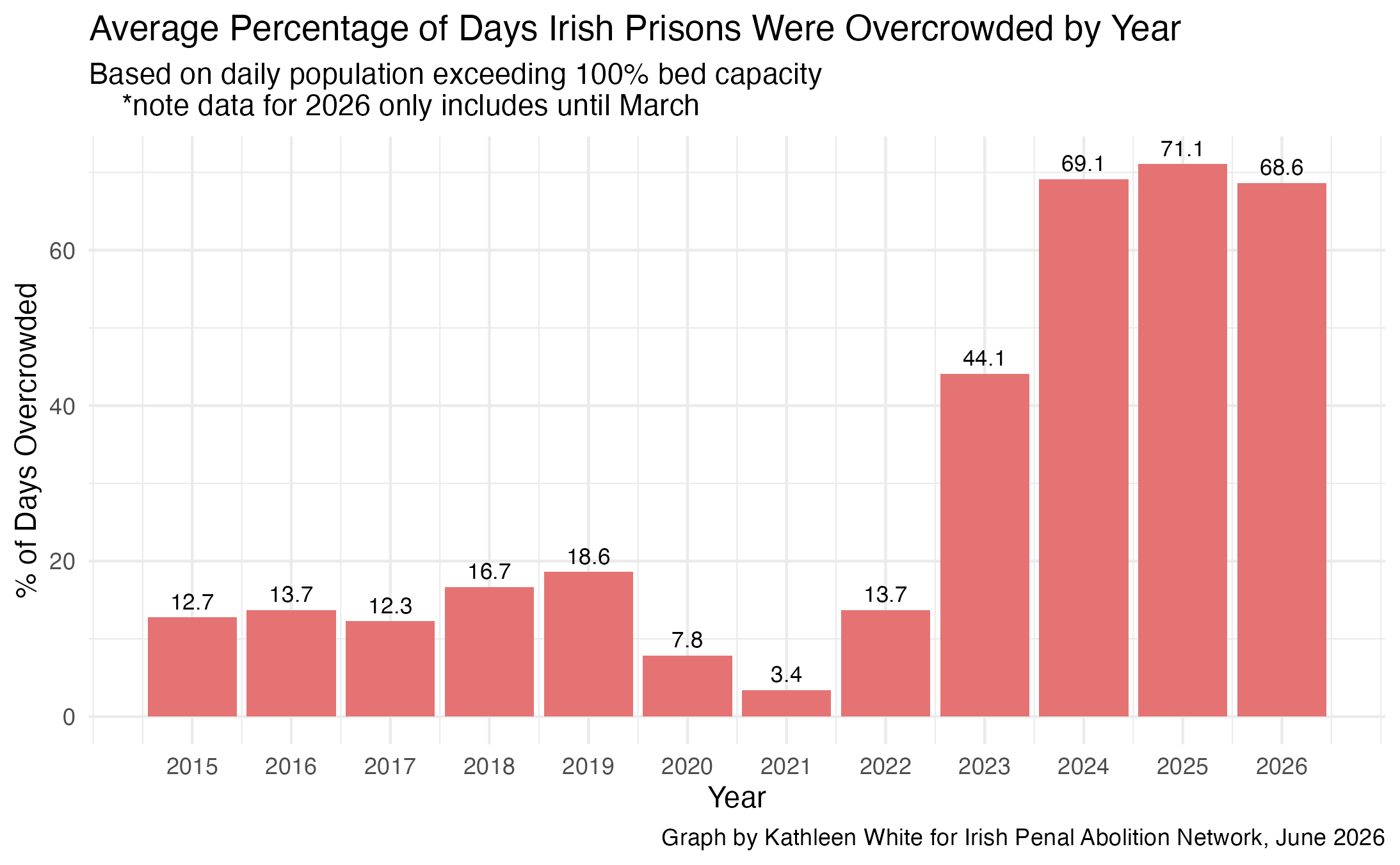
Fig. 1 - Average Percentage of Days Irish Prisons Were Overcrowded by Year
As visualised in Figure 2, there have been a number of expansions in capacity across multiple IPS facilities over the past decade. Figure 2 demonstrates that while larger increases in prison capacity, such as the increase of 96 beds in Cork Prison in 2016 or 201 beds in Mountjoy in 2017 were rarer events, from 2023 onwards, there have been more regular occurrences of smaller scale prison expansions. These increases in expansion events, albeit smaller, do add up for capacity across the prison estate on average and begs the question: does prison expansion alleviate overcrowding in the long-term?
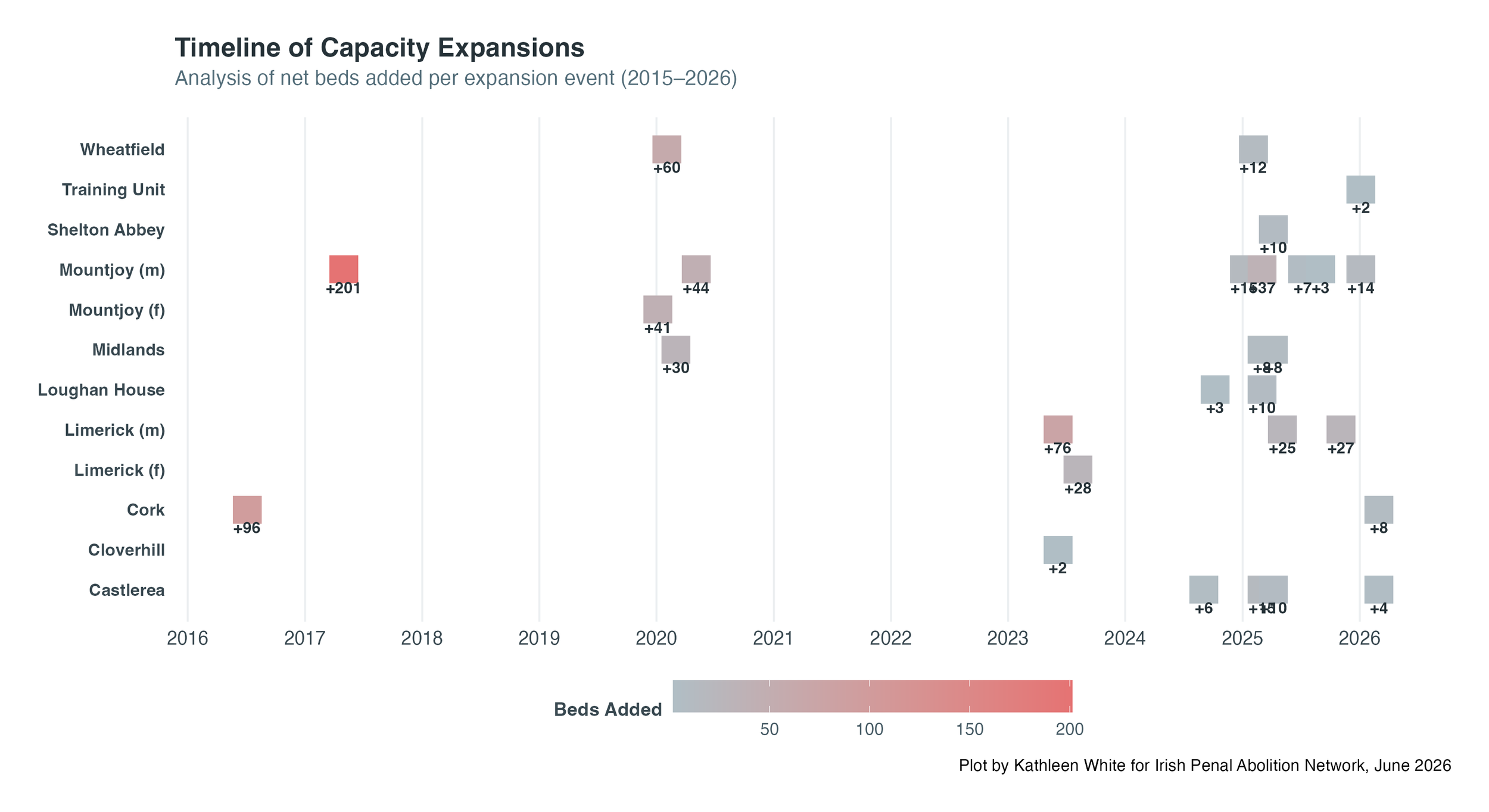
Fig. 2 - Timeline of Capacity Expansions across Irish Prisons
To begin to explore the question above, I looked at overcrowding relative to major dates of prison expansion across prison facilities. In Figure 3 the grey boxes demonstrate when prison populations across facilities are operating at normal capacity, the red boxes demonstrate when a facility is operating over capacity. The white circles represent moments of increased capacity in a facility. What is notable from this visualisation is that despite persistent episodes of increased prison capacity, as demonstrated from the white circles, overcrowding across facilities persists. This relationship is especially persistent from 2023 onwards.
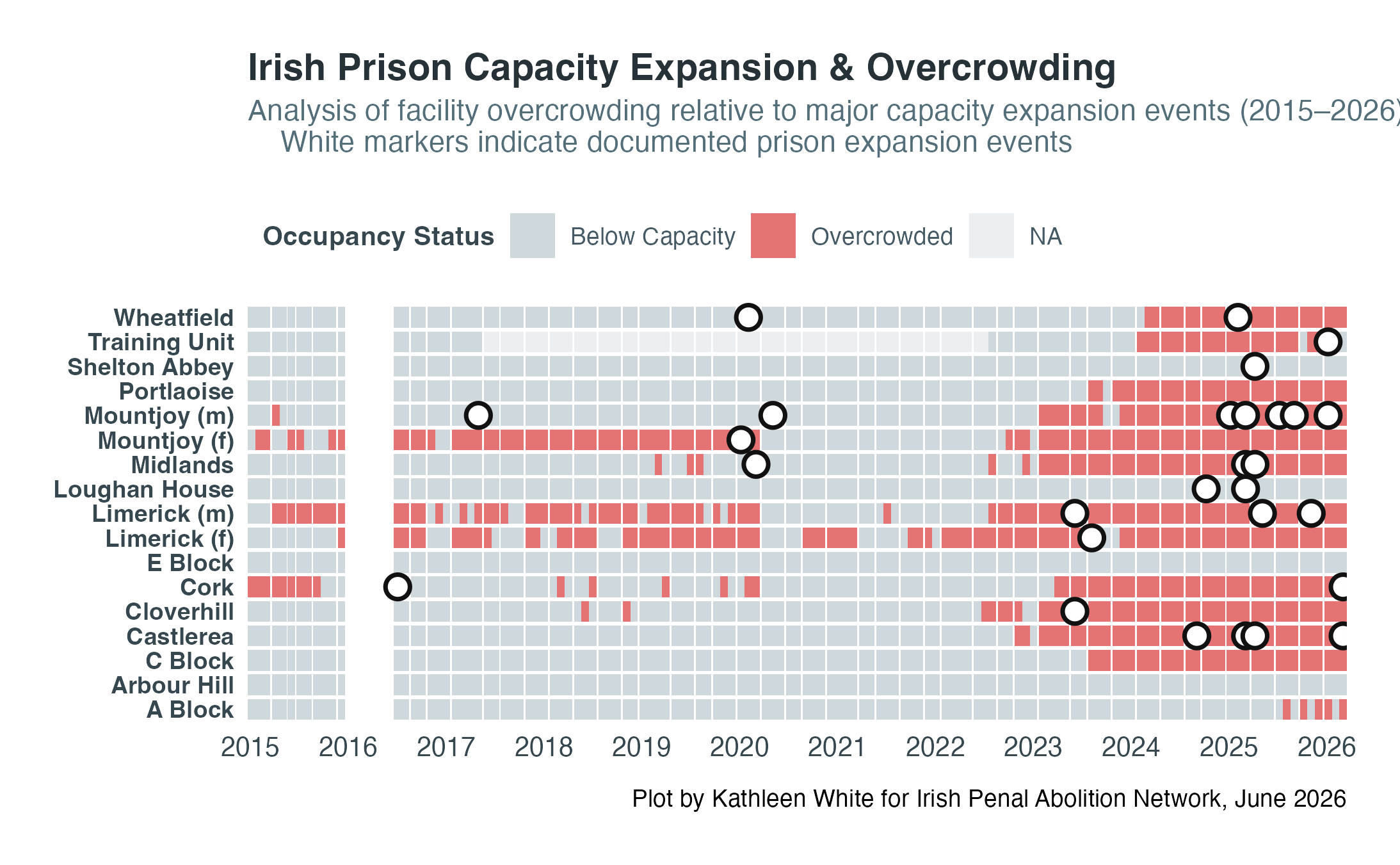
Fig. 3 - Irish Prison Capacity Expansion & Overcrowding
To place this at a localized level, in Figure 4 I show this relationship for each of the 17 Irish prison facilities. The red dashed line represents 100% capacity, and the green markers represent moments of prison expansion per capacity. In general, these plots demonstrate how often prisons operate close to or at levels of overcrowding relative to moments of expansion. Specifically, they visualise the concentration of increased prison capacity and persistent overcrowding, as seen in the cases of Castlerea Prison, Cork Prison, Mountjoy Prison, and Midlands Prison. Additionally, we can clearly see the sharp increase in prison population for the Limerick Women’s facility: despite an increase in operating capacity of 70% in October 2023, by December 2023 its operating capacity was 114% over capacity.
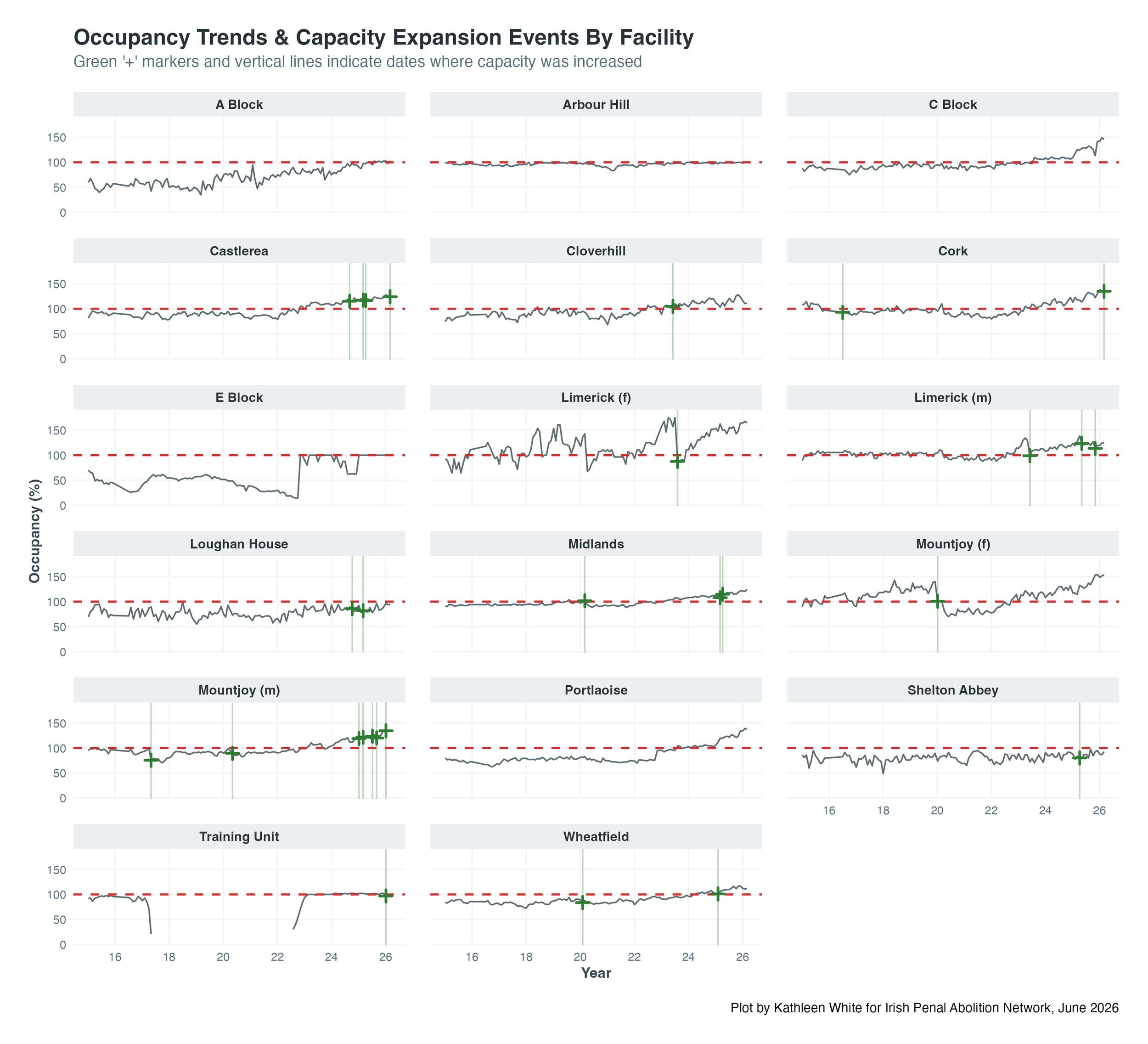
Fig. 4 - Occupancy Trends & Capacity Expansion Events By Facility
Figure 5 expands the Cork Prison plot from Figure 4 to show a close- up view of the persistent overcrowding despite multiple capacity increases, as demonstrated by the green markers. Given the government’s current plans to reopen the old Cork Prison, expanding capacity by 100 spaces for women and 230 spaces for men, this figure is highly relevant; it illustrates that despite capacity increases in 2016 and 2026, Cork Prison has been consistently overcrowded since 2023.
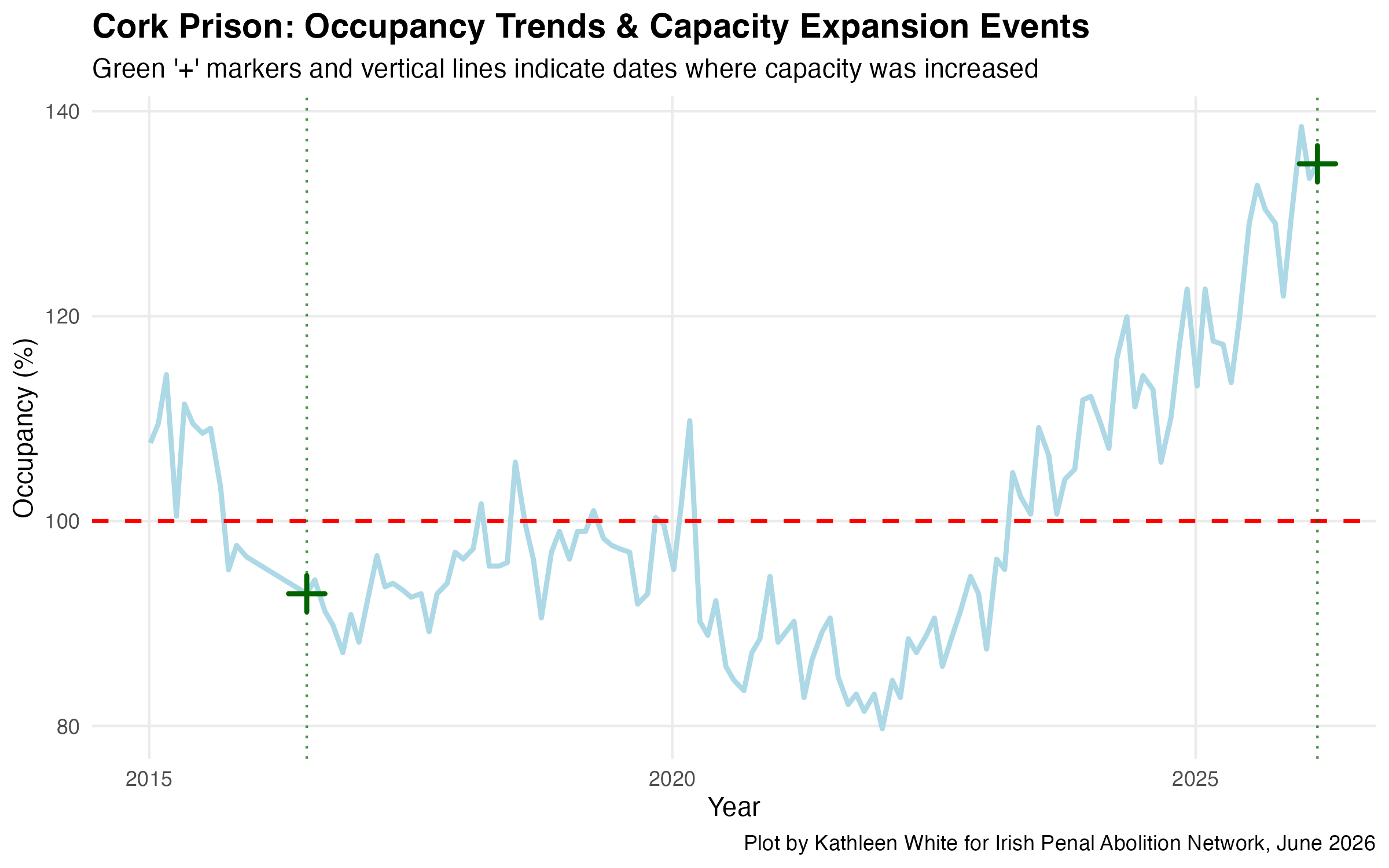
Fig. 5 - Cork Prison - Occupancy Trends & Capacity Expansions Events
Combined, these figures demonstrate that overcrowding persists across the Irish prison estate despite ongoing expansion events, reinforcing the argument that increasing capacity is a temporary trap that fails to address the root issue: overimprisonment. Prison expansion remains a failed policy solution to a decades-long crisis, where the underlying issue is not lack of space, but that too many people are being sent to prison.
The Prison Expansion Trap
Using data directly from the IPS, these graphics visualise and reinforce what abolitionists have been arguing for years: prison expansion is not a solution to issues of overcrowding. At best, it offers a temporary relief, but in reality, expanding prison capacity does not address the underlying systemic causes of over reliance on incarceration. Carceral logic has diffused itself into our society, where policing, surveillance, and punishment have been normalised as the “best” way to handle social conflict. As a result, criminalisation and punishment become a catchall for social issues and harm. However, these challenges ultimately stem from structural inequalities, including poverty, systemic racism, and social injustice, as touched upon in a previous IPAN blog by Ruari-Santiago McBride.
Prison expansion is a trap and we cannot build our way out of the overcrowding crisis. Because overcrowding stems from an overreliance on incarceration, expanding facilities only feeds the problem, locking us into a cycle that must be broken. Instead, the focus must shift towards transformative justice, diversion, and non-custodial alternatives. True safety requires investing in social supports: housing, education, addiction and mental health services, as well as robust community programming.
This blog post is a snapshot into an ongoing project that uses data from the IPS’ Daily Prisoner Population Statistics to understand the role of prison expansion in the rising prison population across the Irish Prison Estate. The next phase of this project, which is currently in progress, uses a Multiple Time Series Framework to run a Log-Log Autoregressive Distributed Lag Model to predict the prison population based on the history of prison custody and the capacity levels. This will allow for an exploration of the systemic relationship between prison capacity expansion and prison population over time and answer the question: Does increased capacity eventually become a self-fulfilling prophecy of more spaces to fill?
This is a timely question as the government makes expansion a clear priority, including reopening the Old Cork Prison, and as the Director General of the IPS celebrated “largest prison building programme in the history of the state” in April 2026. As we have seen visualised above, how long will such expansion alleviate the problems of overcrowding, if it does so at all?
This is part of a larger conversation that recognises outdated and failing systems won’t solve recurring problems. Penal abolition is an invitation to grow something new and an opportunity to explore and invest in alternatives to pervasive carceral logic. We need to reimagine justice and to build new ways of responding to harm in our communities in which accountability, healing, and care are at the centre.

*Kathleen White is an IPAN member
and a PhD student at Rutgers School of Criminal Justice. Her research focuses on critical criminology, transformative justice, and emancipatory prison education. She has a background in community work, advocacy, and prison education in Ireland and the United States.
