When Infrastructures of Care Fail, the State Punishes
By Keith Adams*
In my experience, penal abolitionists are interested in punishment for two main reasons. Firstly, on a human level, they are deeply concerned about the people who have to bear the weight of State domination and coercive confinement. People who have already received disproportionately less of society’s shared goods. Secondly, on a broader canvas, punishment reveals an incredible amount about the society we live in. Who we choose to punish? How we punish? The reasons we create for why we punish. I don’t think any other concept gets to the heart of the values we hold collectively.
In my experience, penal abolitionists are interested in punishment for two main reasons. Firstly, on a human level, they are deeply concerned about the people who have to bear the weight of State domination and coercive confinement. People who have already received disproportionately less of society’s shared goods. Secondly, on a broader canvas, punishment reveals an incredible amount about the society we live in. Who we choose to punish? How we punish? The reasons we create for why we punish. I don’t think any other concept gets to the heart of the values we hold collectively.
It has been almost two months since RTE’s “The Psychiatric Care Scandal” documentary aired. We found out that prison in Ireland had become a warehouse for people with severe mental ill-health. Approximately 340 people with severe psychiatric needs were languishing in our prisons when the documentary was first shown. Some held in extreme isolation for long periods. Ireland’s prison system is being used to warehouse those who require specialist therapeutic support. In doing so, prisons are working to cover up the failings of Ireland’s insufficient care infrastructure.
Yet, has anything substantive changed in the meantime? Like most scandals in Ireland, if politicians hold tight at the beginning, the scandal is quickly forgotten in the news cycles. There has been little coverage since. But the horrific story of Patrick Sibanyoni, a 58-year-old man originally from Guyana, did catch my attention. It revealed unchecked State-inflicted harm, institutional neglect, and dehumanisation.
Trapped by the State’s Failure to Care
In early February 2026, Patrick had been on remand in Cork Prison for almost nine months. Back in May 2025, he was arrested on 24 charges of causing criminal damage to cars and property. No person was reported as being hurt. When assessed by the consultant psychiatrist in Cork Prison, Patrick was diagnosed as suffering from a psychotic illness, most likely schizophrenia.
In a February 2026 hearing at Cork Circuit Criminal Court, Patrick’s defence barrister told the court that he was unfit to plead and should be sent to the Central Mental Hospital. Judge Helen Boyle agreed Patrick was unfit to plead and she had a report outlining that Patrick’s condition was “deteriorating in prison.” But her direction for him to get a bed in the Central Mental Hospital had not happened. The prosecution barrister informed the court that “the CMH was not in a position to give your order effect because of issues of capacity.”
Then we get to a troubling part of the hearing, as the judge considered bail with a condition that Patrick go to the psychiatric unit in Cork University Hospital upon release. The State, through the prosecuting barrister, objected as they considered his inability to plead as evidence that bail conditions would not be complied with. This is, in all likelihood, was true. But what we also have is the State objecting to the release of a person from prison for healthcare which the State has failed to provide. When there is no politics of care, the only remaining option is punishment regardless of how unwell a person is.
The Government’s funding of community mental health services is only 6% of the total health budget, which has resulted in severe staff shortages and a lack of secure multi-year funding to community services. This is far short of the 10% goal of both Sláintecare and international standards, despite being a very wealthy European country. Yet, the Government is spending almost €500 million euro on more prison spaces. This includes a new prison in Cork on the site of an old prison which closed a decade ago, meaning that more people like Patrick will be detained indefinitely in the future. Infrastructures of care have been sacrificed for infrastructures of punishment and containment.
It is important to note here that expansion of institutional psychiatric placements can typically be traced to a failure to provide well-funded, responsive, and wide-reaching community mental health interventions.
All parties—judge, defence, and State—agreed on the Central Mental Hospital placement for Patrick, yet he continued to be confined to prison for a psychiatric placement that does not exist. As the judge sent Patrick back to prison, she wanted it on the court record that “it is clear Mr Sibanyoni is unwell, he is not disruptive here in court, but he is constantly talking quietly to himself – I am not a psychiatrist, but I have a report before me that says he is in urgent need of medical attention.”
Punishment, Not Care
In a subsequent hearing, days later, a few more revealing points emerged at this intersection of care, punishment and “race.” Racism is important to consider here as it has an effect on both care and punishment. Members of the Black or Black-Irish community are overrepresented in prison committals, almost double their representation in the population at large. While ethnic minority groups face barriers and discrimination in accessing appropriate mental healthcare.
When the CMH clinical director appeared in court, she confirmed a waiting list of 38 people. But she said that if a bed became available, other cases would take precedence over Patrick. This confirmed that a prisoner with a psychiatric condition which did not meet the threshold for admission on a particular day, would remain indefinitely in prison until either the threshold for admission reduced or their mental health deteriorated enough. Access to care for a diagnosed condition reduced to chance.
Finally, in closing, Judge Helen Boyle made a startling comment before again remanding Patrick back to prison, “I have a report that says he is in urgent need of medical attention. The reality is that if this man does not get treatment, he will never be fit to plead.” Instead, Patrick was caught in a truly Catch-22 situation - too ill for punishment, but not ill enough for care – so he will be punished until he is ill enough to be cared for.
The dynamics of this case laid bare how state-inflicted harms unfold bureaucratically and the everyday ways people are dehumanised within criminal justice structures. Patrick has not been found guilty of any crime. He is unable to stand trial as he has a serious psychiatric illness. He has also been in a severely overcrowded prison for almost nine months because of failed State provision of mental health treatment. Patrick’s condition has definitively worsened in prison. These are all indisputable facts of his case. Our willingness to punish outweighs our capacity to care.
Through this ordeal, the State has inflicted immeasurable harm and suffering on Patrick Sibanyoni. There is a depth to the pain experienced from being in prison with a psychiatric illness. There is the potential for greater disability over his life as his condition worsens without treatment. In Cork Prison, he did not enter a period of no change, but of rapid deterioration. And now, the judge’s priority for treatment is that he can stand trial for property damage after he becomes well. Not so that what has been harmed can be restored, if possible, but solely so the State’s desire for retribution can be satisfied.
Patrick’s detainment was not a quirk of the system as there were almost 40 other people in the prison system waiting on in-patient psychiatric care, with seven waiting over a year. Almost 200 men in Cork Prison are on the psychology service waiting list. Adding another prison in Cork will result in more people rotting in prison that would be better served through non-penal interventions. Without structural change, this continues. Our model of excessive punishment needs to be re-imagined through a paradigm of care and funded as such. Cessation of the prison expansion programme with diversion of funding to community mental health and addiction services would be one approach.
Taking this approach seriously would have a series of gradual knock-on effects. Decarceration would occur as people like Patrick are released to appropriate placements. Reducing the overimprisonment of unwell people would lead to less overcrowded, degrading conditions. Care displacing the desire to punish as a society may begin to shape and influence the building of systems, processes, and communities that are just.
[Since this blog piece was written the author understands that Patrick has since been transferred to Central Mental Hospital.]
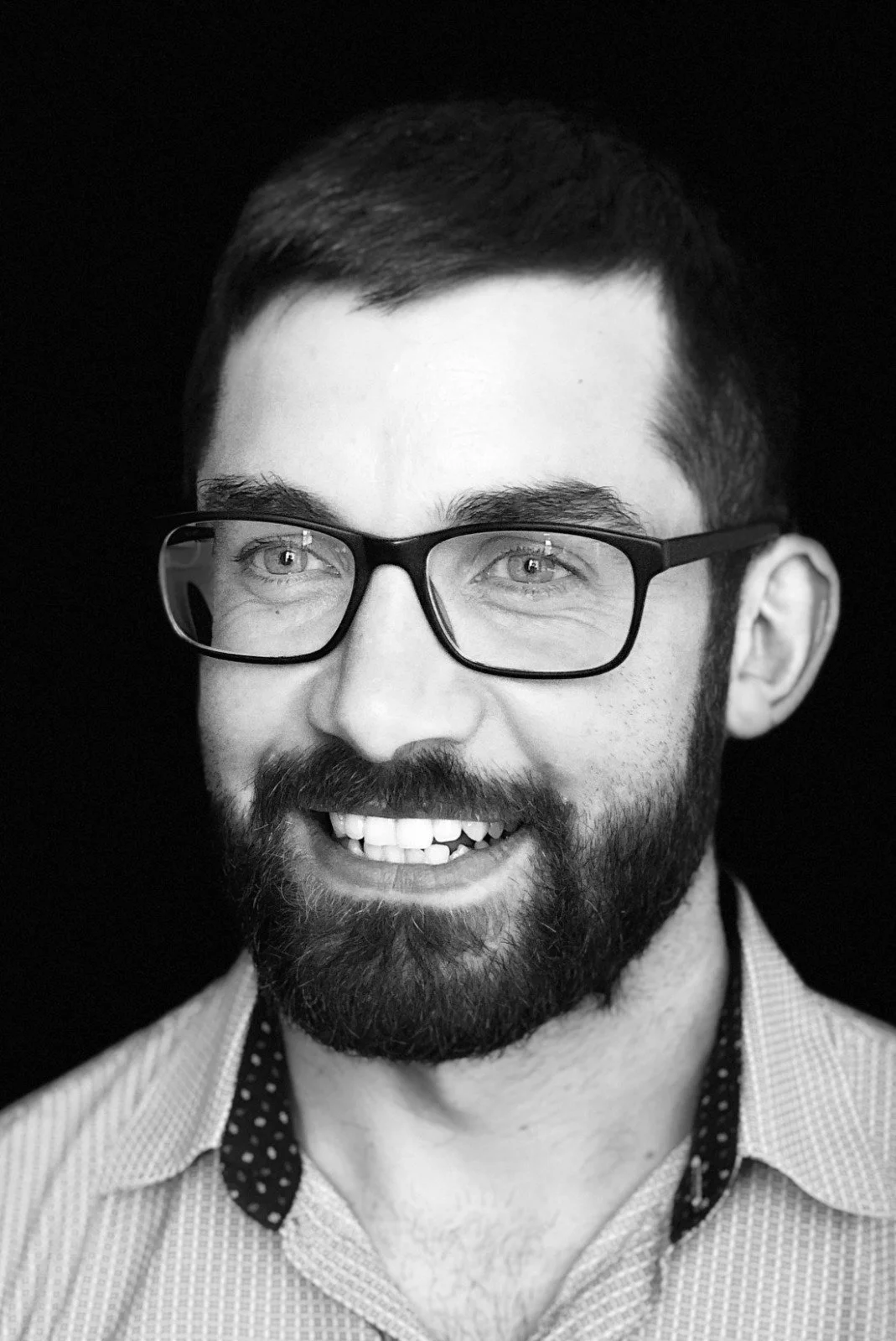
*Kieth Adams is a member of IPAN and…
a Penal Policy Advocate at the Jesuit Centre for Faith and Justice, Dublin. This role involves prison research, policy advocacy, and education with school and community groups. His research considers reductionist approaches to punishment, with a focus on women's imprisonment and deaths in custody.
